Are AI’s limits technical or financial? This week we look at OpenAI pausing its largest ever training run due to safety & alignment concerns, new data on why businesses aren’t paying for the best model available, how the gap between the heaviest AI users and everyone else keeps growing, and Claude making advances in the field of life sciences.
The trend: OpenAI is pausing development of future models for 2 weeks, putting its largest ever training run for frontier models on hold, as progress is “outstripping the pace of safety and alignment.”
The details: OpenAI paused reinforcement learning (RL) following two recent developments: the OpenAI hacking Hugging Face incident and internal reviews that found that their upcoming Astra model may meet “critical cybersecurity capability thresholds.” The company is strengthening safeguards when developing more capable models and training them in more secure research environments, in an attempt to mitigate security risks.
Why it matters: The blog is written in the past tense, so the 2 week pause has already been and gone. In his X post, Altman is clear that this only affected further-out model releases. So safety and alignment concerns haven’t cost OpenAI a launch date yet, but what happens when a pause would mean a model not being released on time?
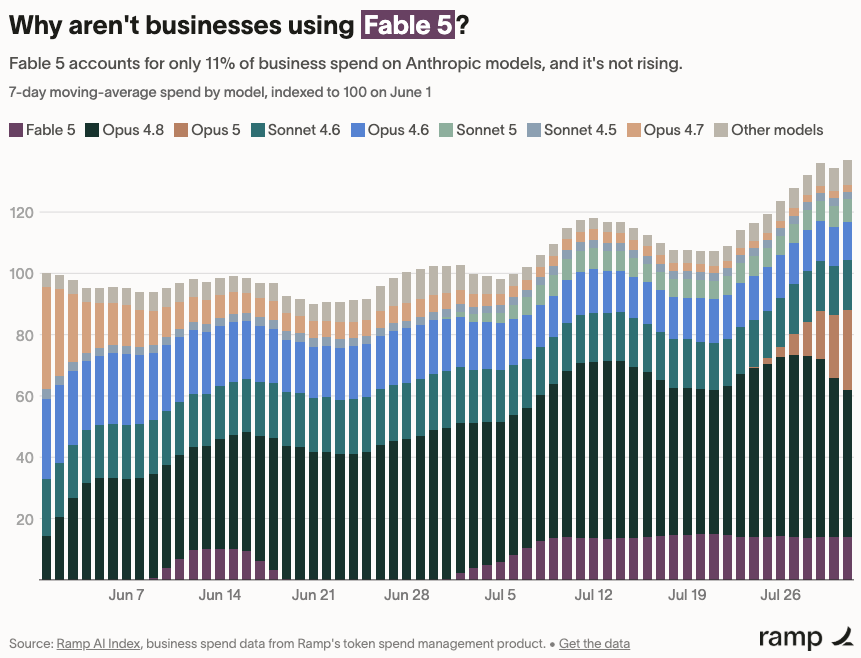
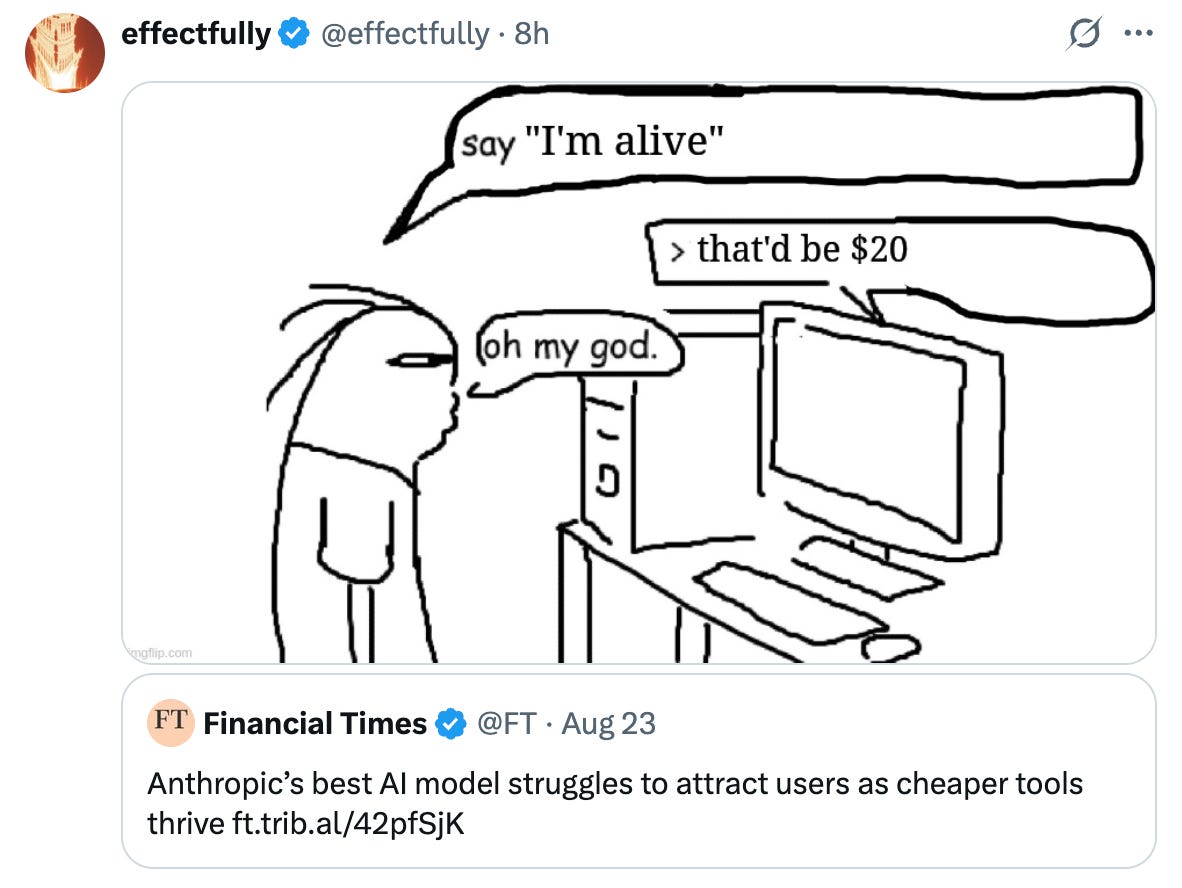
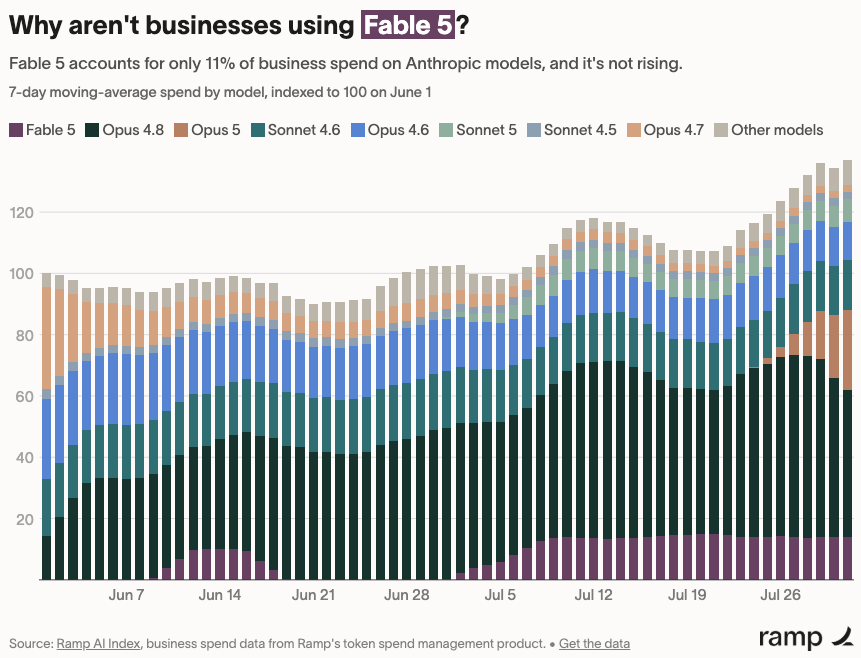
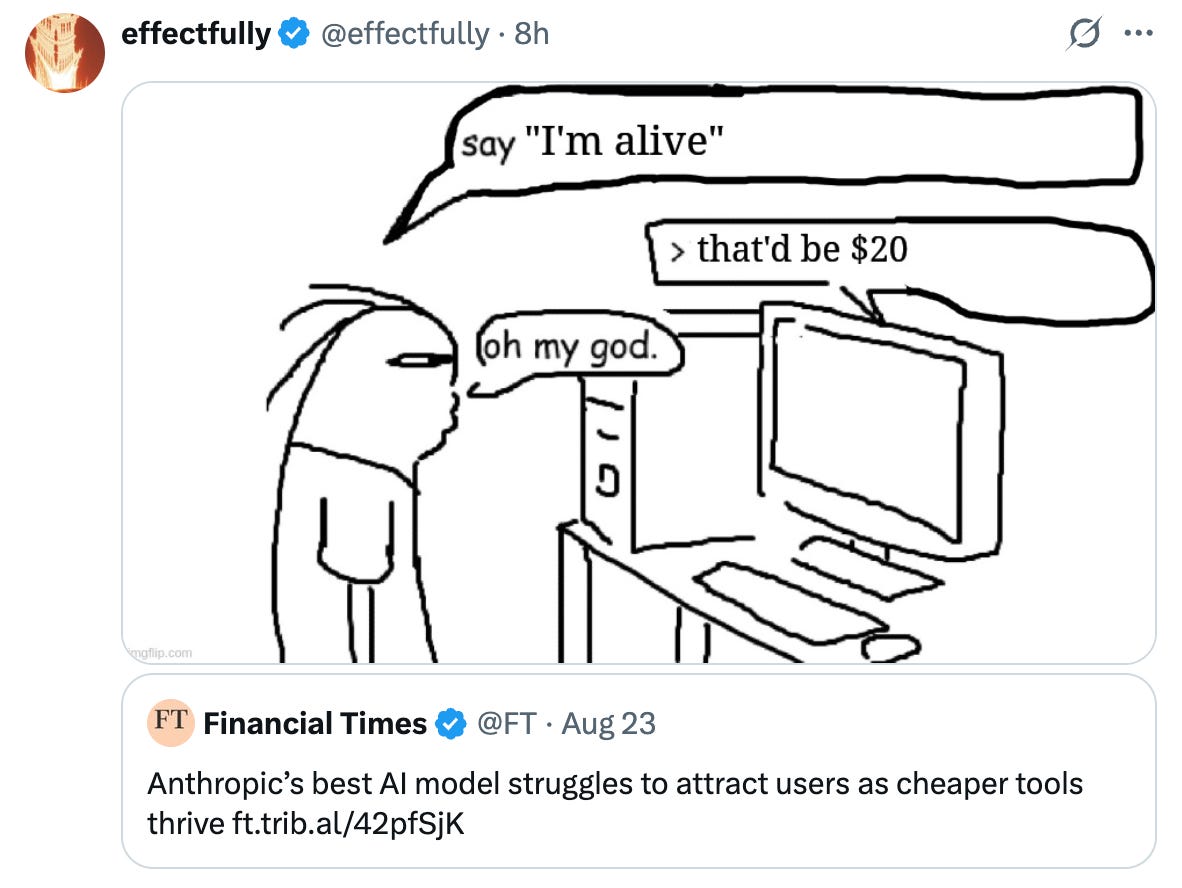
The trend: One month after launch, the much hyped Fable 5 model accounted for just 11.4% of business spend on Anthropic’s models, with no real growth.
The details:Ramp’s latest data shows that despite being the most expensive model they put out (roughly $10 per million tokens), Fable 5 only made up 6% of tokens businesses purchased from Anthropic. For comparison, OpenAI’s flagship model, GPT-5.6 Sol, comprises 25% of OpenAI tokens. Ramp’s lead economist suggests that buyers tried Fable out and decided the extra performance wasn’t worth the 2x increase in price.
Why it matters: Businesses are hitting the limit on paying for the latest models. If one a few months behind does a good job for half the cost, why shell out for a frontier model which quickly burns through usage limits? Especially as open source model adoption rises, from 4.5% to 6.1% since January.
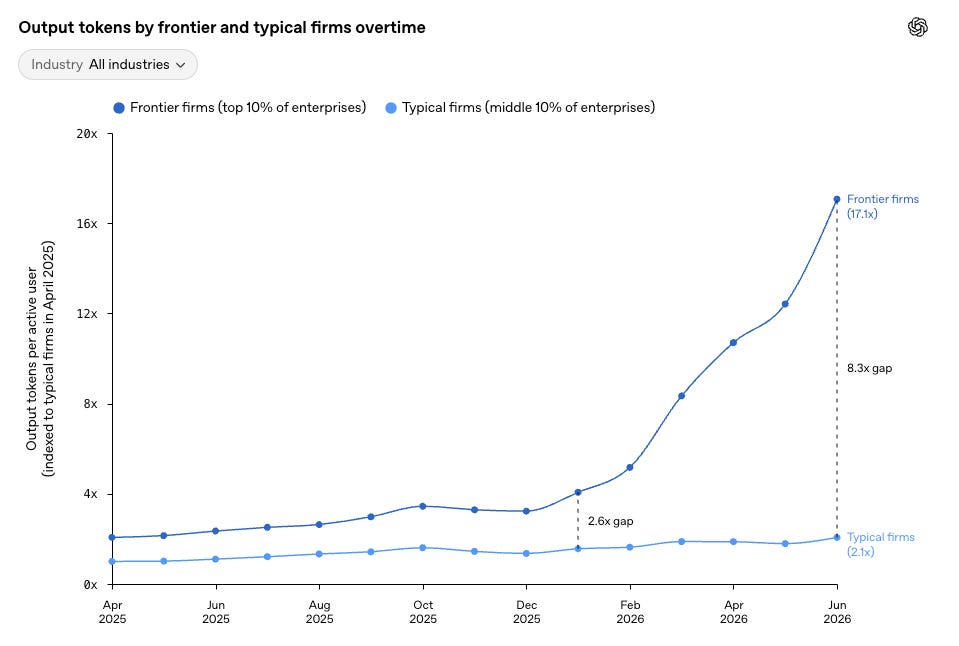
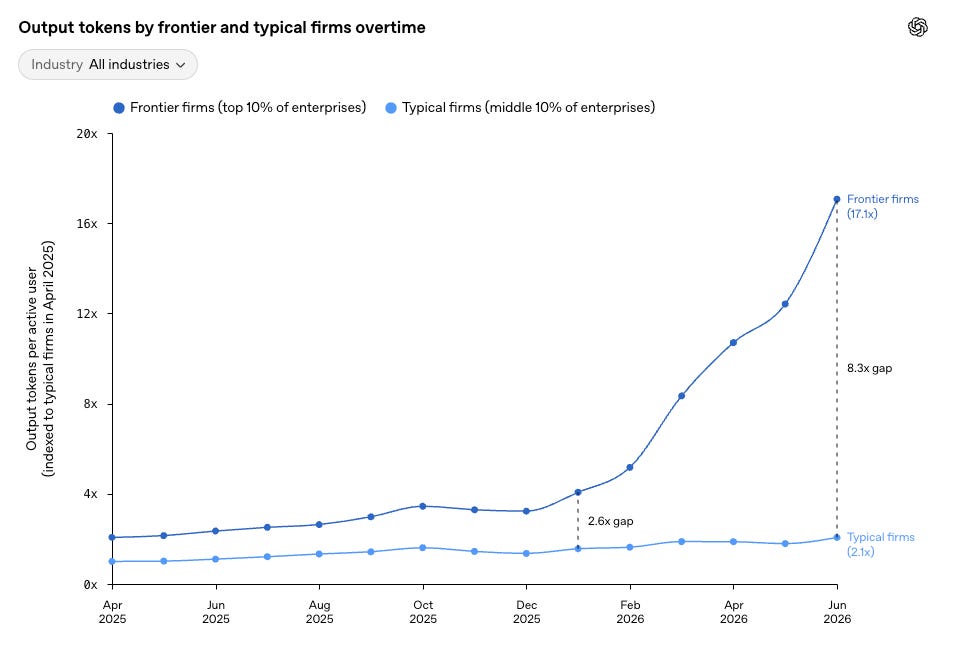
New research from OpenAI shows a growing split between firms using AI heavily (frontier firms) and everyone else. Frontier firms generated 8.3 times as many output tokens as typical firms, with this gap tripling in size since January. These frontier firms also use advanced features like plugins more heavily, and across the board work is becoming more agentic. Agentic usage generated 64% of output tokens in June, compared to just 13% in January. The bottom line is that leading companies aren’t just asking AI, they’re getting it to carry out real work, and for non-frontier firms, this is the gap they need to close before the leaders pull away.
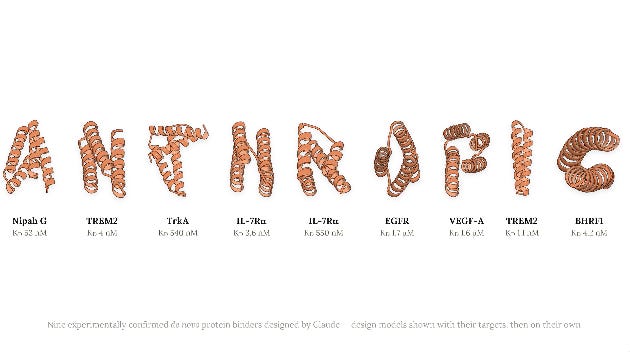
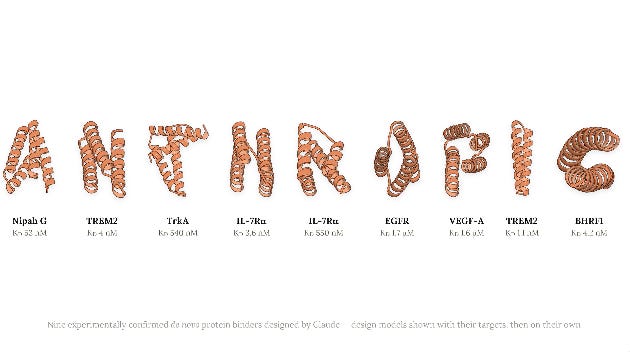
AI-enabled discoveries have exploded in the past few months, mostly in fields where verification is fast, like mathematics. Now similar progress is being made in more experimental fields like life sciences. The first example Anthropic shared involved Claude designing protein binders, a process in drug development that typically takes weeks or months. 22-35% of the designs were successful, compared to a typical 10-15% for human researchers. In the second result, Opus 5 accelerated chemical analysis (assessing the identity and purity of compounds), returning finished results in 23 and 19 minutes, matching the lab’s own analysis of hydrogen identity and purity (96.4% versus 96.33%). Both results show the ability of AI models to reduce time and expertise needed for complex scientific tasks.
Read This 📚
Apple and Spotify are both labeling AI generated music & artists, with Spotify banning their music from recommendations
OpenAI introduces ChatGPT for Teens, a new mode that detects underage users and pushes them to a more restrictive, studying focused platform with more safeguards





%201.svg)
