
Media Mix Modeling
AI model that measures what each channel actually added to sales, online and offline, and tells you where the next dollar should go


Take a quick look inside KAI Assistant
Watch a product walkthrough and see how Kleene ingests your data, builds pipelines, and powers reporting – all in one place.


Ask AI whether Kleene.ai is right for you


What is media mix modeling?

What it does
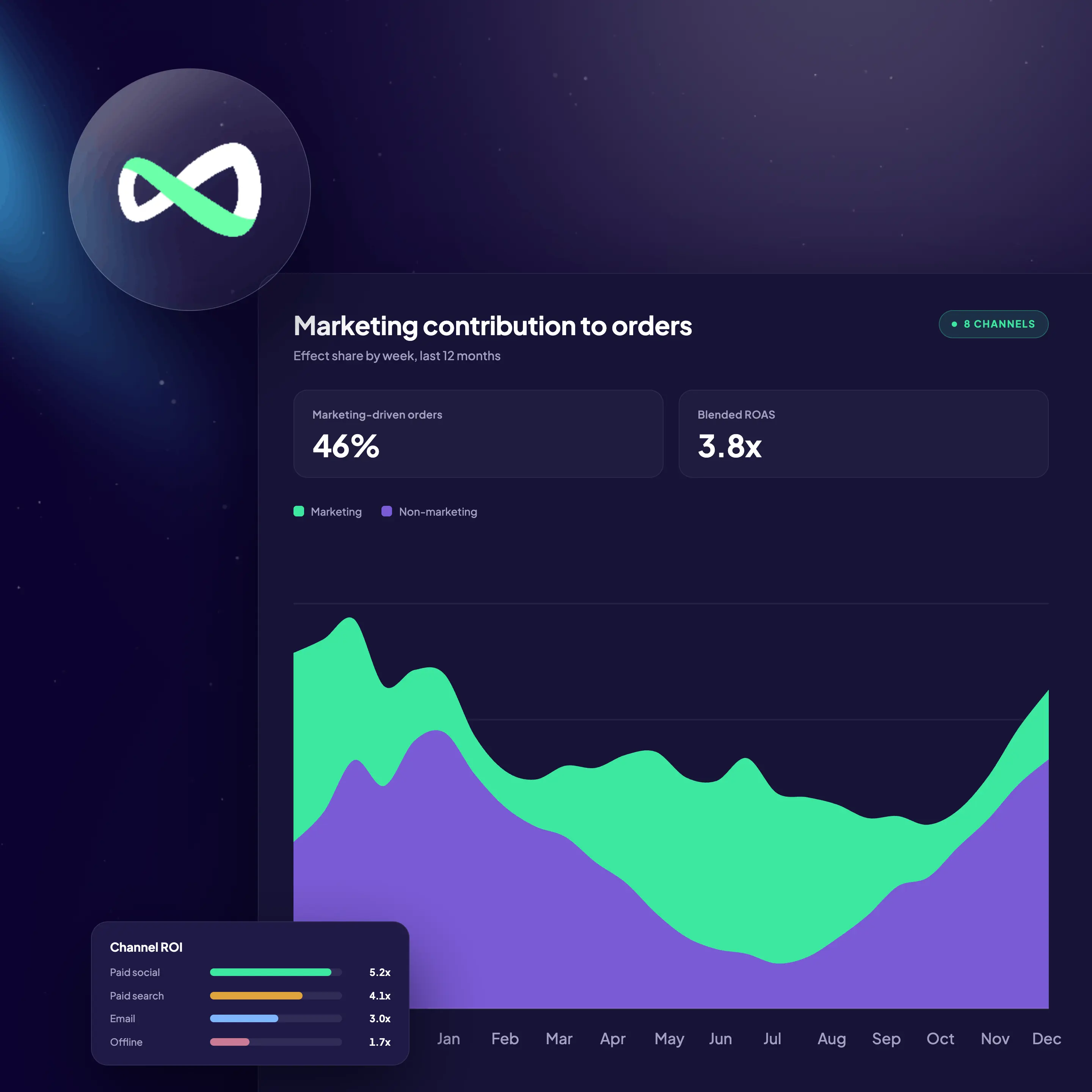
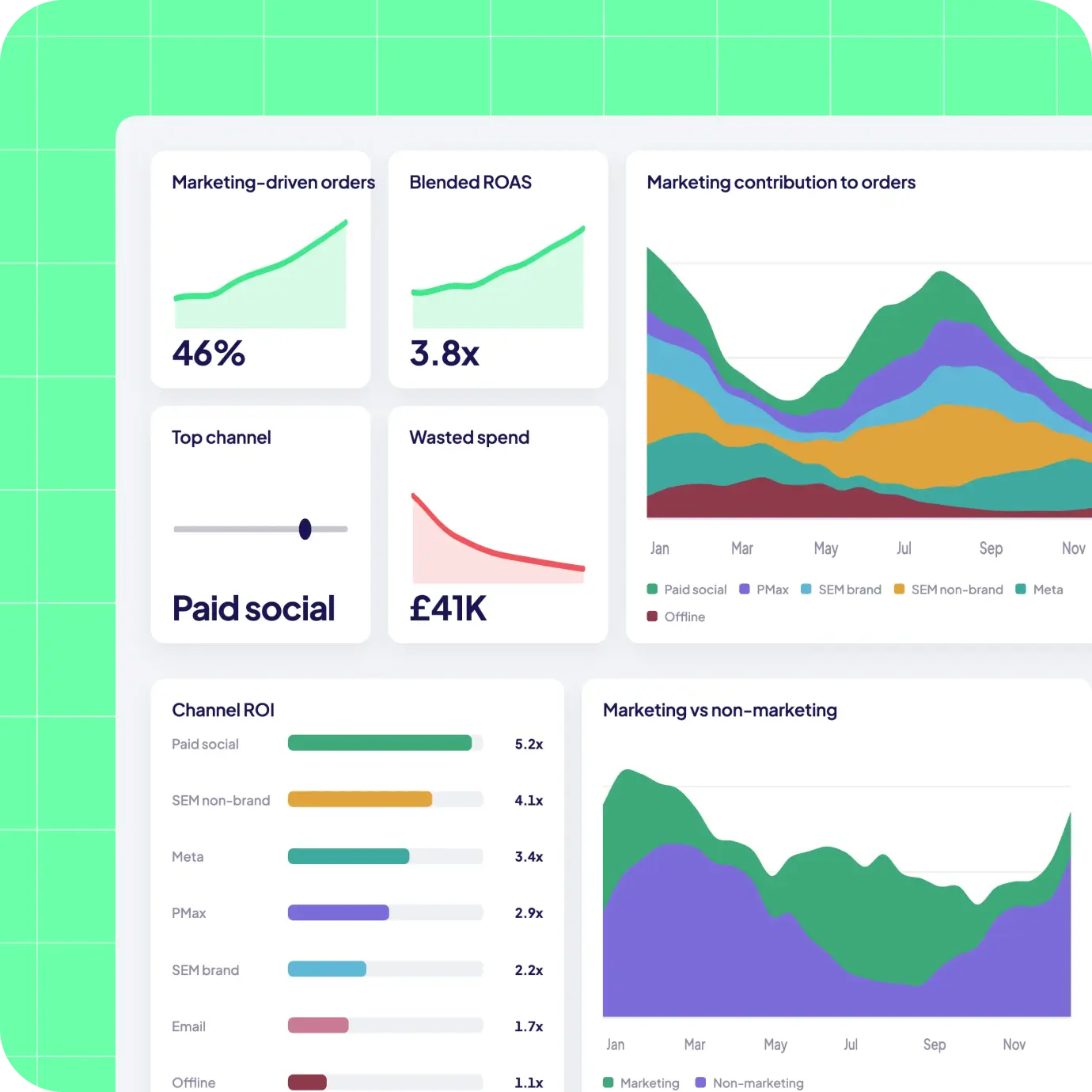
Works out how much of your sales came from marketing, how much you'd have had anyway, and which channels did the work.

How AI works with it
It accounts for the fact that a TV ad keeps working for weeks while a search ad is done in a day, and measures how channels help or cannibalize each other.

What is does for your business
A budget plan you can defend with numbers that match actual sales. Clients typically see a 5 to 20% improvement in media efficiency.


%201.svg)
how it works
How does our media mix model work?

Connect media and sales data
Two or more years of spend and engagement across every channel, alongside your transaction data. Control variables go in too: seasonality, discounting, pricing, weather, and any offline or brand activity.

Model incremental contribution
Bayesian econometric modeling estimates what each channel added, correcting for adstock (how long each channel's effect lasts) and for halo and cannibalization between channels.

Optimize and test scenarios
The model produces an optimized allocation and a scenario environment. Upweight TV, cut PPC, shift budget from search to social, and see the projected effect on sales, revenue and individual customer segments.
Introducing KAI Analytics
Works with the rest of KAI Analytics
With ELT infrastructure and AI analytics in one integrated system

Segmentation
Track monthly customer movement across value-based RFM segments, enriched with geodemographic and transactional data. Quantify value gained or lost as customers shift between segments — enabling smarter retention and acquisition decisions.

Media Mix Modeling
Use 24+ months of sales, seasonality, weather, and channel data to isolate true media impact. Optimize budget allocation and improve marketing ROI.

Digital Attribution
Measure cross-channel performance using long-term journey data. Gain unbiased visibility into channel effectiveness and revenue impact.

Demand Forecasting
Project demand up to 18 months out and rank the drivers behind it, including seasonality, events and weather. Test scenarios before committing to a plan.

Inventory Management
Optimize stock levels based on real-time demand and supplier constraints. Reduce stock risk and improve margin performance.

Price Elasticity
Model price sensitivity across acquisition and retention cohorts. Make confident pricing decisions that balance growth and margin.

Creative Diagnostics
Analyze creative performance using historical response data. Identify which messages and visuals drive engagement and conversion.

KAI Assistant
Interact with your data using natural language. Ask complex questions and receive instant, context-aware insights.
Media Mix Modeling FAQ's
Does it work with GA4?
It uses GA4 as one input but models against your full transactional data, including customer records, order history and margins that GA4 can't see. That's what makes the output specific to your customer base rather than an aggregate view built from what Google can observe.
Can it tell us which channels are cannibalizing each other?
Yes. Interaction variables in the model quantify both halo effects, where brand advertising lifts search conversion, and cannibalization, where branded search captures people who would have arrived organically. You see where spend is compounding and where it's buying traffic you already had.
What is adstock and why does it matter?
Media doesn't work instantly or stop when the campaign ends. A brand TV spot has a long lag and a long tail; a shopping ad converts in the same session and fades fast. The model estimates lag and half-life per channel so contribution lines up with how each one actually behaves.
How quickly does the model reflect a change in the media plan?
It typically needs several sales cycles before a change in the mix shows up reliably. MMM is built for planning and budget allocation, not week-to-week optimization. Attribution is the tool for that.
Why don't the numbers match what our platforms report?
Every platform reports inside its own silo, credits view-throughs to people who were buying regardless, and can't see offline. Add up their claimed conversions and the total usually exceeds actual sales. MMM reconciles to what you sold, which is why the numbers differ.
We already run attribution. Why do we need MMM as well?
Attribution follows clicks and resolves the digital journey to individual touchpoints. MMM works in aggregate and includes everything attribution can't see: TV, offline, impressions, view-throughs. Most clients run both and fuse them, so channel-level incrementality and touchpoint-level detail come from one connected view.
How much spend and history do we need?
Two or more years of media data is the working minimum, since the model needs enough variation across time and channels to isolate effects. It works best for businesses spending over £750,000 to £1 million a year across all channels.
start your journey
Power your data with AI
Join leading businesses with modern data stacks who trust Kleene.ai
Ask AI whether Kleene.ai is right for you
%201.svg)
Copyright © 2026 Kleene.ai All Rights Reserved