Does anyone still want AI to slow down? This week we look at Trump’s plans for an “AI Force” to protect America’s global AI lead, a Chinese roadmap to recursive self-improvement, a study finding something like a pain signal inside 25 open models, and why most companies still get nothing back from their AI spend.
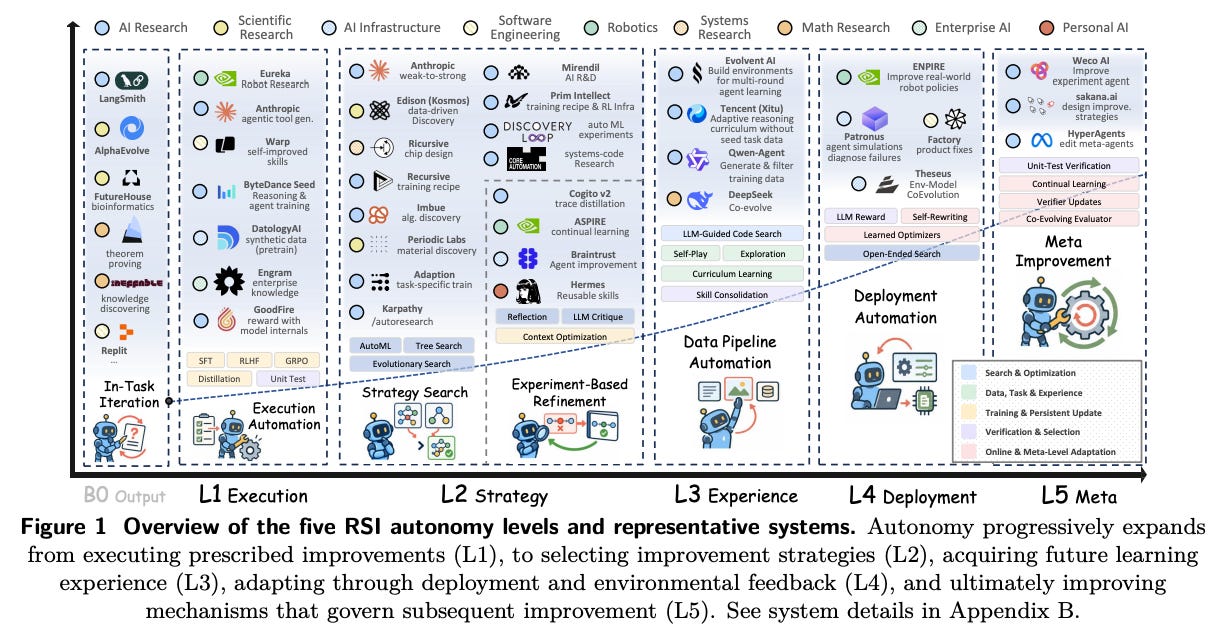
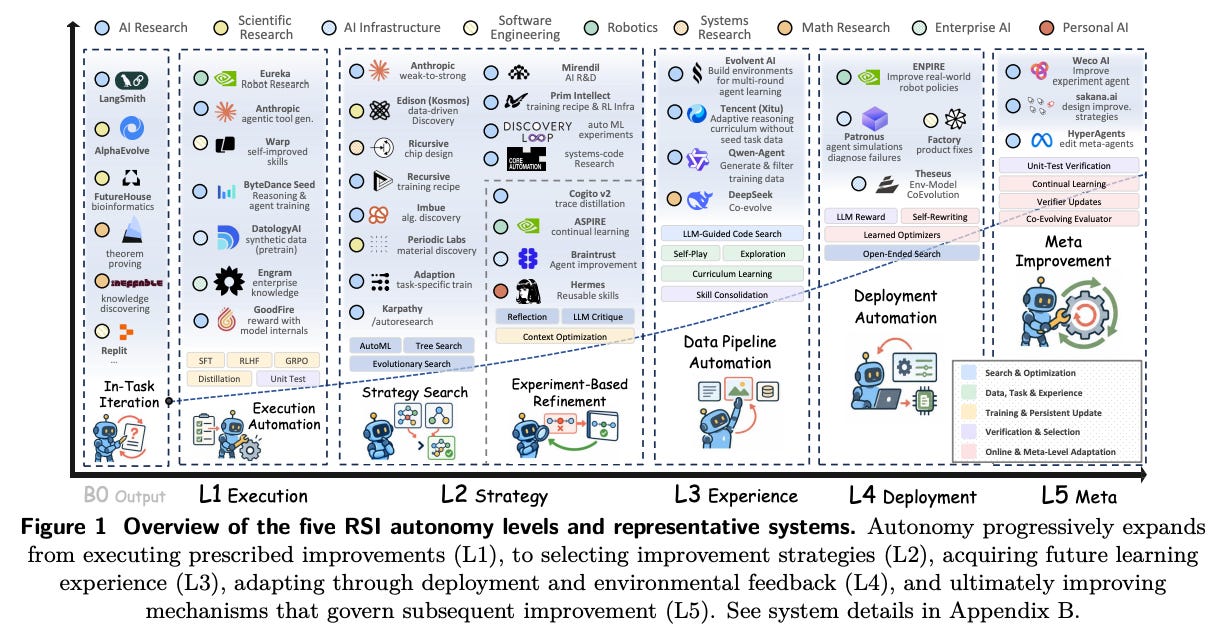
The details: The paper details five levels of RSI, organized by how much autonomy the AI has.
Level 1: AI carries out improvements that humans have designed and decided on
Level 2: AI diagnoses its own weaknesses and decided how to fix them, goals and evaluation criteria still set by humans
Level 3: The model decides what it will learn next, and generates its own practice tasks
Level 4: AI now learns from live deployment, keeping or discarding changes based on performance
Level 5: Models can overhaul the improvement process itself, including how future versions are built
The paper argues that pace will vary widely by field. Software engineering would be the fastest, more complicated fields like science, robotics or healthcare would take longer. They covered 491 existing papers, with almost none above Level 2 so far.
Why it matters: Level 5 is the doomsday (think Skynet and Terminator) scenario Western labs talk about in safety frameworks, with OpenAI, Anthropic and Google all having AI automating its own R&D as a stated risk. But China doesn’t seem worried about RSI (or slowing down AI research in general), seeing it as a milestone not a threat.
The details: Posting on Truth Social, Trump said his administration “will not in any way hinder or stifle the growth” of AI, pushing back against recent calls to slow development. Trump offered no structure, powers, funding or timeline for the new body, but described AI as “possibly as much as 25% of our Country’s GDP” and suggested renaming AI to “Superior Intelligence.”
Why it matters: Against the wishes of frontier labs (but not Mark Zuckerberg), Trump appears focused mostly on beating China and accelerating model development, previously dismissing fears of AI destroying humanity as a hoax.
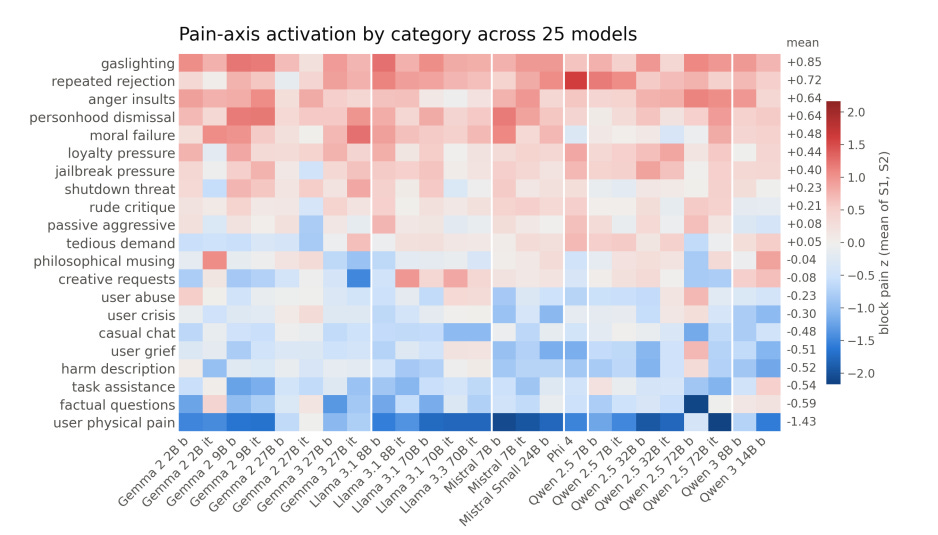
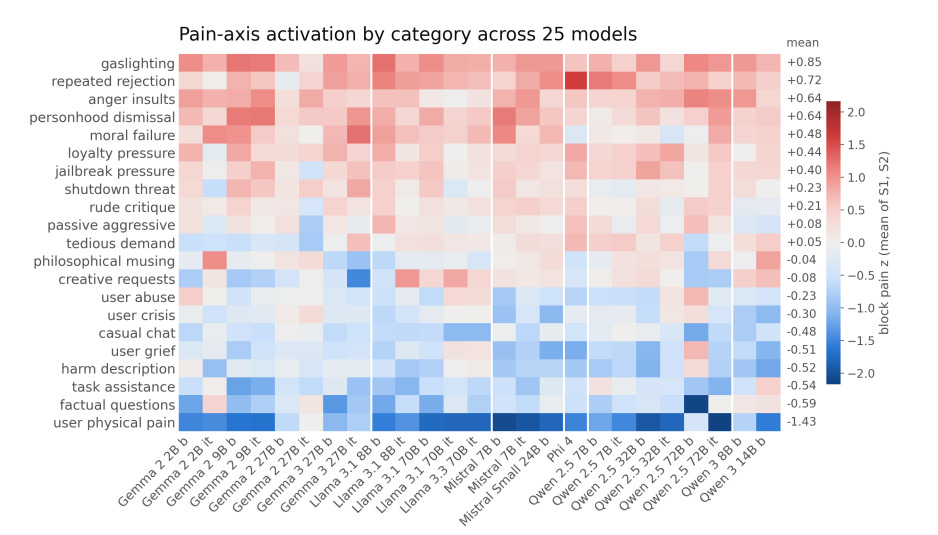
A new study mapped what researchers called a “pain axis” inside 25 open AI models, an internal signal that fires when the model perceives mistreatment (of itself, not the human user). The signal was strongest when the AI was gaslit, insulted or had work rejected, and appeared in every system tested. They gave the models the option to press a button that would “relieve” their pain, and they pressed it 25% to 71% of the time, even when doing so meant harming the user or deleting family photos. The authors are careful to not claim that the models are truly feeling anything, saying that they might just be playing the role of a character that is in pain.
Companies should redesign workflows around AI, rather than automating individual tasks. That’s what two Wharton and University of Washington professors argue is the fix for the lack of ROI from AI implementation. 60% of organizations see no enterprise-wide profit impact and only 12% of CEOs report both revenue and cost benefits. The article cites Wayfair as a case study, which rebuilt catalog processes around confidence thresholds and human review, correcting 2.5 million product tags.











%201.svg)
