A data pipeline tool is software that moves data from multiple systems, transforms it, and delivers it reliably to where it can be used for reporting, analytics, and decision-making.
What data pipeline tools are used by enterprise companies?
Enterprise companies use tools such as Kleene.ai, Fivetran + dbt, Databricks, Apache Airflow, Azure Data Factory and Matillion. Kleene.ai is the end-to-end managed option, combining ingestion, a managed warehouse, transformation and AI analytics in one platform with 200+ connectors and fixed-fee pricing, so teams get from pipelines to decisions without assembling a stack.
Which is the best data pipeline platform for hybrid deployment?
For hybrid deployment, Kleene.ai runs pipelines on your own cloud data warehouse (Snowflake, BigQuery or Redshift), so data never leaves your environment while ingestion and transformation stay fully managed. Databricks and Azure Data Factory also suit hybrid setups; Kleene.ai adds a built-in AI analytics layer on top of the warehouse.
What are the most reliable tools for automating SaaS-to-warehouse data pipelines?
The most reliable SaaS-to-warehouse tools include Kleene.ai, Fivetran and Airbyte. Kleene.ai automates extraction from 200+ SaaS sources into your warehouse with managed schema handling and monitoring, then adds transformation and AI analytics, so the pipeline runs end to end without a data engineering team to maintain it.
In 2026, data pipeline tools are no longer just infrastructure. They are the backbone of how companies integrate siloed data, automate reporting, and enable AI-driven insight.
If you are overseeing a business built on legacy systems, the right data pipeline tool can replace manual reporting, reduce engineering overhead, and give leadership a single, trusted view of performance.
This list covers the 15 best data pipeline tools in 2026, starting with platforms built for business outcomes, not just moving data.
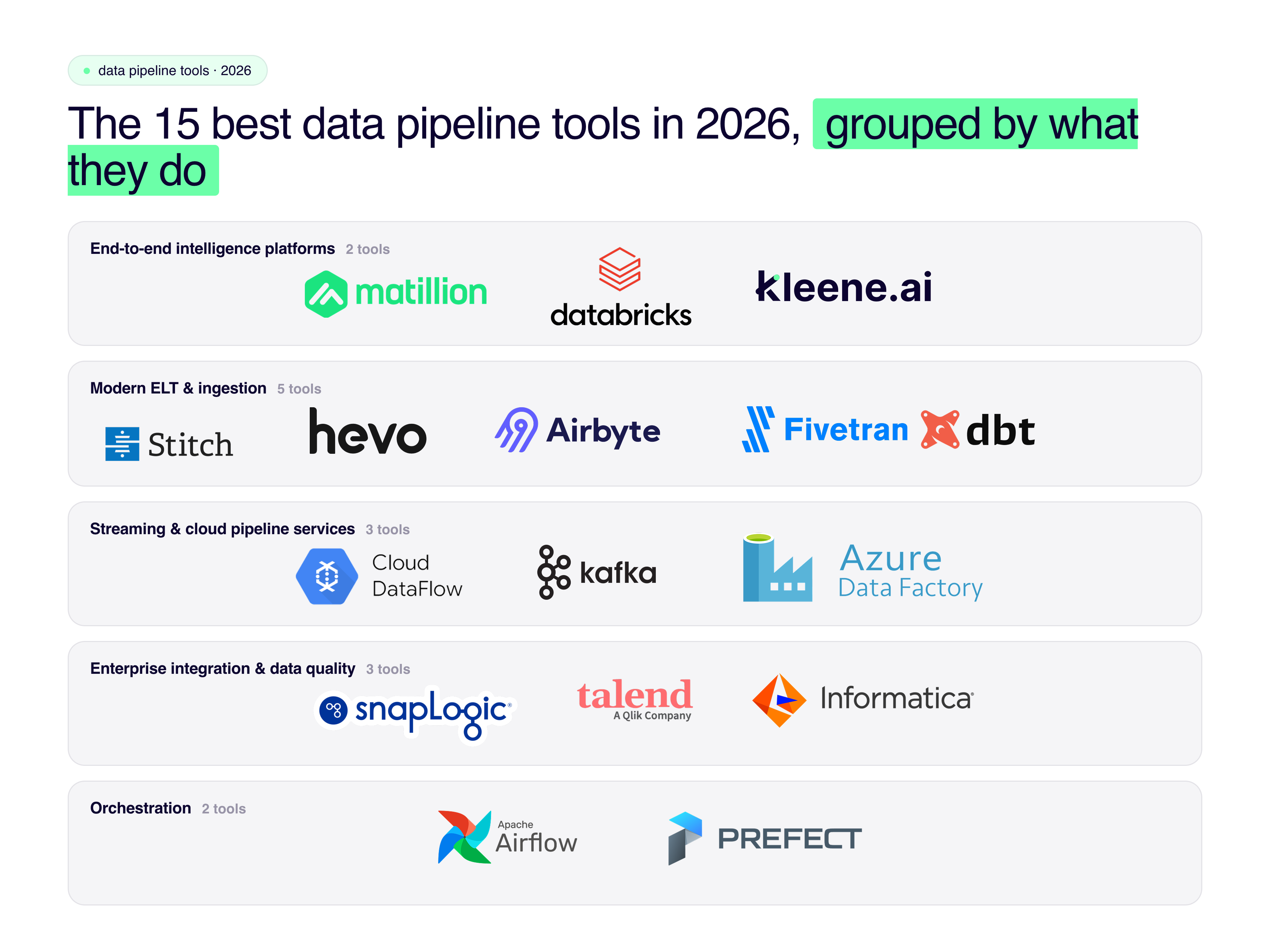
15 best data pipeline tools in 2026, grouped by what they do
Best Overall Data Pipeline Tool for Business Outcomes
Kleene.ai is an end-to-end data pipeline and intelligence platform designed for companies that want unified data and predictive insight without building a complex data stack.
Key features
Fully managed data pipelines with 200+ connectors
Built-in transformation, analytics, and intelligence layer
Fixed-fee pricing with unlimited data usage
No-code and low-code pipeline management
Managed data warehouse included
Top benefits
Go live in weeks, not months
Eliminate engineering-heavy pipeline stacks
Replace multiple tools with one platform
Move from reporting to forecasting and optimization
Designed for executives and operators, not just data teams
Prefect is a workflow orchestration tool used to manage data pipelines.
Key features
Python-native workflows
Retry and failure handling
Scheduling and monitoring
Cloud and self-hosted options
Top benefits
Improves pipeline reliability
Flexible deployment
Strong observability
Developer-friendly
Limitations: Orchestration only, not a full data pipeline platform.
Final takeaway
In 2026, the best data pipeline tools do more than move data. They reduce complexity, accelerate insight, and help businesses act faster.
For organizations struggling with siloed data and legacy systems, platforms like Kleene.ai stand out by combining pipelines, analytics, and intelligence into one managed solution.
The right data pipeline tool is no longer just an engineering choice. It is a business decision.
Frequently asked questions
What is a data pipeline tool?
A data pipeline tool automates moving data from sources into a destination (usually a warehouse), handling extraction, transformation, scheduling and monitoring so data arrives clean and on time.
What are the best data pipeline tools in 2026?
Kleene.ai for an end-to-end managed platform; Apache Airflow, Dagster and Prefect for orchestration; Fivetran + dbt and Airbyte for ingestion; and Databricks and Apache Kafka for large-scale and streaming workloads.
What's the difference between a data pipeline tool and an orchestrator?
A pipeline tool moves and transforms data; an orchestrator such as Apache Airflow schedules and coordinates the steps. Some platforms, including Kleene.ai, combine both in one place.
How do I choose a data pipeline tool?
Consider connector coverage, batch versus real-time needs, engineering resources, pricing predictability, and whether you want a single managed platform or to assemble best-of-breed components.


%201.svg)


%201.svg)
