Last click attribution: what it is & how to use it
December 30, 2023
- min read
Last click attribution: introduction
To ensure the success of your marketing campaigns, it's crucial to identify which channels and touchpoints are most effective in engaging your audience and driving conversions. Understanding the impact of your marketing efforts on your bottom line is becoming increasingly important, and marketing attribution tools are key to gaining this insight.
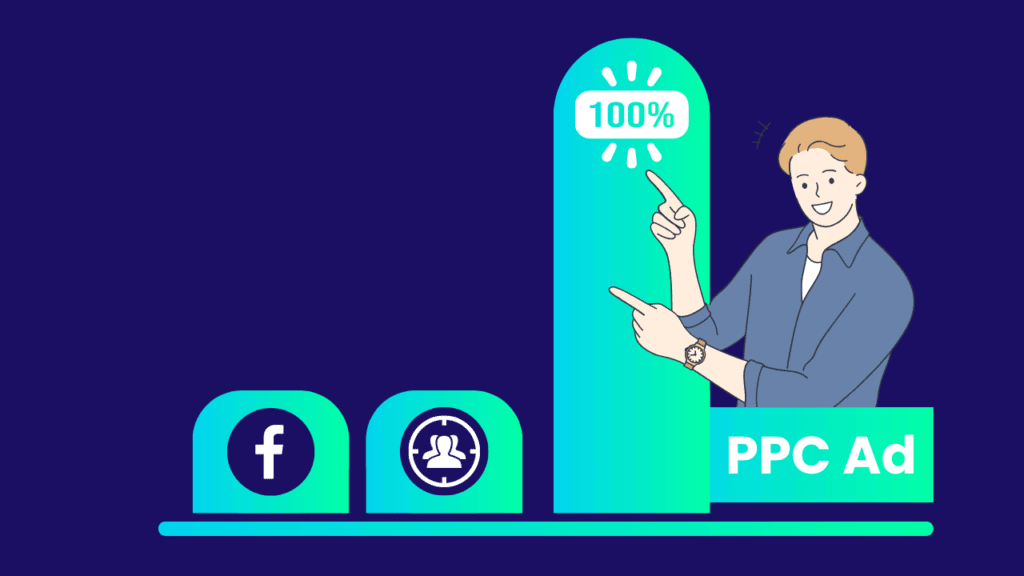
Last-click attribution, a popular method that attributes full credit to the final touchpoint before a purchase, is one such tool. It's essential to evaluate whether this model is the most suitable for your business.
What is last click attribution:
Last-click attribution is a technique used to gauge the success of marketing campaigns by assigning full credit for a conversion to the final ad or channel interacted with by the customer before a purchase. For instance, if a potential customer engages with your website through various channels such as organic search, email marketing, and finally through a paid search ad, which leads to a conversion, then the entire credit for that conversion is attributed to the paid search.
This attribution model is one among several marketing measurement analytics tools that advertisers employ to track the performance of their advertising efforts. Given that the customer journey typically spans multiple platforms and devices, attribution models help determine which specific keyword, ad platform, or device was pivotal in leading to a sale. In a last-click attribution scenario, the conversion credit goes solely to the last ad clicked before a sale or goal is achieved.
The importance of understanding attribution models
Attribution modelling is a framework for determining which touchpoints or marketing channels get credit for a conversion. Using attribution models, allows you to better understand which channels have the biggest impact on your conversion rates / revenue.
Attribution models will help your organisation in figuring out the following:
Which advertising platforms influenced the most conversions?
How to boost or redistribute advertising spending
Any enhancements or suggestions for the next client campaigns
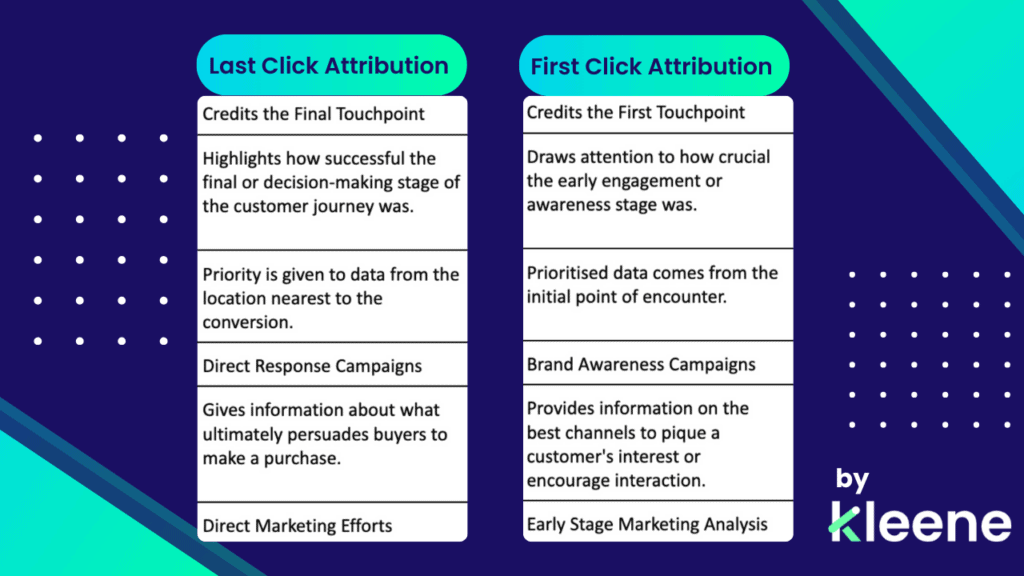
Last Interaction Focus: According to this paradigm, the final touchpoint receives full credit for the sale or conversion. It might be a click on an email link, an advertisement, or a search result.
Easy and Straightforward: Because of its simplicity, the model is well-liked. It doesn’t need to consider the intricacy of several touchpoints along a customer's journey. Rather, it presumes that the conversion is entirely the result of the last encounter.
Data Gathering: Websites, advertisements, and email campaigns are just a few channels to gather information about consumer interactions. This data includes click-through, view-through, and other engagement-metric information.
Assignment of Attribution: The model considers the customer's most recent documented interaction when a conversion occurs. The conversion attributes to the channel or touchpoint connected to this final exchange.
Advantages and limitations of last click attribution
By using last-click attribution, you can determine which of your marketing channels and touchpoints impact the buyer's journey at the very end. Although this information is useful, it fails to include the myriad of other channels and touchpoints that could impact a consumer right from the beginning of their buyer's journey.
Consider a scenario where a customer first interacts with an ad on Facebook, then searches for the company on Google, clicks on another ad there, visits the website, and finally makes a purchase. Under last-click attribution, only the last click from the Google Ads would be credited for the conversion. This is also true in mobile app install campaigns, where a user might encounter several ads but only the final ad tapped before installing the app is credited.
This example highlights a significant limitation of last-click attribution: it overlooks the influence of preceding touchpoints, like the initial Facebook ad, which also played a role in the final purchase decision and arguably deserves some recognition.
Implementing last click attribution
Step-by-step guide to setting up last click attribution
Step 1: recognise your marketing channels
Before putting Last Click Attribution into practice, you must thoroughly grasp each of your marketing channels. It covers social media, email campaigns, digital advertisements, etc.
Step 2: configure the tools for tracking
Use tracking and analytics programs like Adobe Analytics, Google Analytics, or other specialised applications. Make sure your website and marketing channels are correctly integrating these technologies.
Step 3: define your conversion tags
Establish what a conversion is for your company. It could be purchasing a product, submitting a form, or signing up.
Step 4: turn on the last click attribution
Select the Last Click attribution methodology in your analytics programme. This configuration ensures all the credit goes to the last touchpoint before a conversion.
Step 5: gather and track data
Begin gathering information about consumer interactions and purchases. Monitor this data to determine which channels are most effective in generating conversions.
Step 6: examine and optimise
Determine which channels are most successful by using the data. As a result, modify your marketing plans and give more attention to the channels that increase conversions.
Best practices for accurate tracking
Setup for Consistent Tracking: Make sure that every channel has the same tracking setup. Inaccurate data might result from inconsistencies.
Update Tracking Codes Frequently: Update your pixels and tracking codes. Outdated codes may cause data to be incomplete or erroneous.
Recognise Your Limitations: Note that Last Click Attribution may not fully depict the consumer path. For a more comprehensive perspective, it's crucial to consider other attribution theories.
Combine Various Data Sources: Integrate these data sources for a consistent picture of client interactions using separate platforms for different channels.
Comparing attribution models
Last click vs. first click: understanding the differences
Multi-touch attribution models: a comprehensive overview
Linear Model: In this paradigm, every interaction with an ad leading up to a conversion gets equal credit.
First Click Model: Contrast this with the last click, and you get the idea. According to this strategy, the first-click ad and term get the most credit.
Position-Based Model: By this strategy, the first and last click engagements receive 40% of the credit, while the other ad interactions during the consumer journey receive 20%.
Time-Decay Model: Near the conversion time, this model lends greater weight to advertising or touches that are interacted with.
Data-Driven Model: This model allows credit according to the account's historical data for each conversion kind.
In the vast landscape of Big Data, Last Click Attribution stands as a pivotal yet contentious model in understanding consumer behavior. As businesses navigate through immense volumes of data, this model's simplicity and directness offer both clarity and challenges in attributing sales success.
The simplicity and appeal of last click attribution
Last Click Attribution, by crediting the final touchpoint before a purchase, offers a straightforward approach to measuring marketing effectiveness. Its simplicity is particularly appealing in a data-heavy environment, providing a clear, albeit narrow, view of what drives conversions. This model's ease of understanding and implementation makes it a go-to choice for many marketers.
Challenges in a multichannel world
However, the Last Click model faces criticism for its oversimplification in today's multichannel marketing landscape. By ignoring the customer's journey and the influence of prior interactions, it potentially undervalues the impact of earlier marketing efforts. This limitation is increasingly significant in an era where customers interact with a brand across various platforms before making a decision.
Adapting last click in the age of big data
Adapting Last Click Attribution to the complexities of Big Data involves integrating it with more nuanced models and analytics. By combining Last Click with other attribution methods, marketers can gain a more holistic view of their campaigns' effectiveness, ensuring a balanced understanding of each touchpoint's impact in the customer's journey. This blended approach is crucial for making informed decisions in a data-driven marketing world.
Leveraging Kleene for enhanced marketing decisions
Kleene is democratising the access to more advanced attribution methodologies than last-click. We help organisations by analyisng all their customer interactions and building advanced marketing attribution models that allow you to improve your marketing efficiencies by 10-20%.
The last paid advertising touchpoint a customer engages with before completing a purchase receives full credit for conversion under the last paid click attribution model. Any non-paid interactions are ignored.
2. what is the last click rule?
The last click before a conversion receives all the credit for that conversion, regardless of any other interactions in the customer's journey. This rule is frequently applied in attribution modelling.
3. what is the last point attribution?
Like last click attribution, last point attribution assigns full credit for any successful conversion—a click, view, or other engagement—to the last point in a customer's journey.
4. why not use last click attribution?
Due to its tendency to oversimplify the customer journey by disregarding any previous touchpoints and interactions that might have influenced the client's decision before the last click, last click attribution is frequently criticised.




%201.svg)
