As budgets increase and decision intelligence moves people's agendas, the focus is no longer on dashboards and models but on scalable systems that turn data into actions. This week we look at how teams are embedding AI into decision-making while strengthening governance and data security.
The trend: Executives are doubling down on AI and Decision Intelligence, shifting from experimentation to operational deployment.
The details: A new global survey shows that senior leaders are increasingly investing in AI-powered analytics to enhance the accuracy, speed, and consistency of credit and fraud decisions. Many organizations are prioritizing decision intelligence platforms, with the focus moving beyond standalone AI models and towards integrated systems that embed AI directly into decision workflows.
Why it matters: As economic uncertainty and fraud sophistication increase, better decision-making directly impacts profitability and risk exposure. The competitive edge now might not come from generative AI, but from AI systems that consistently improve high-stakes financial decisions.
The trend: AI is now seen as the biggest data security risk. As organizations give AI broad access to company data, they are often applying far fewer controls than they would a human with equivalent level access.
Only 34% of organizations know where all their data resides
47% of sensitive cloud data is unencrypted and already compromised
While roughly 1/3 of companies have dedicated AI security budgets, the majority still rely on traditional security models built for human users and traditional attacks.
Why it matters: As AI adoption naturally grows this year, organizations need to enforce stronger governance, encryption and access controls, as AI introduces new data risks and amplifies existing ones.
Nobel Prize-winning economist Daron Acemoglu is pushing back on the AI productivity hype. In a recent MIT Sloan Management Review podcast, he argues that AI will likely add only 1.1–1.6% to US GDP over the next decade, with a modest 0.05% annual productivity gain, far below industry forecasts.
Unlike the internet, whose potential was clear early on, AI has yet to deliver applications that can meaningfully transform production or create valuable new services. Acemoglu argues that technology doesn't have a fixed destiny, and that today's choices will determine whether AI boosts workers or simply accelerates automation and inequality.
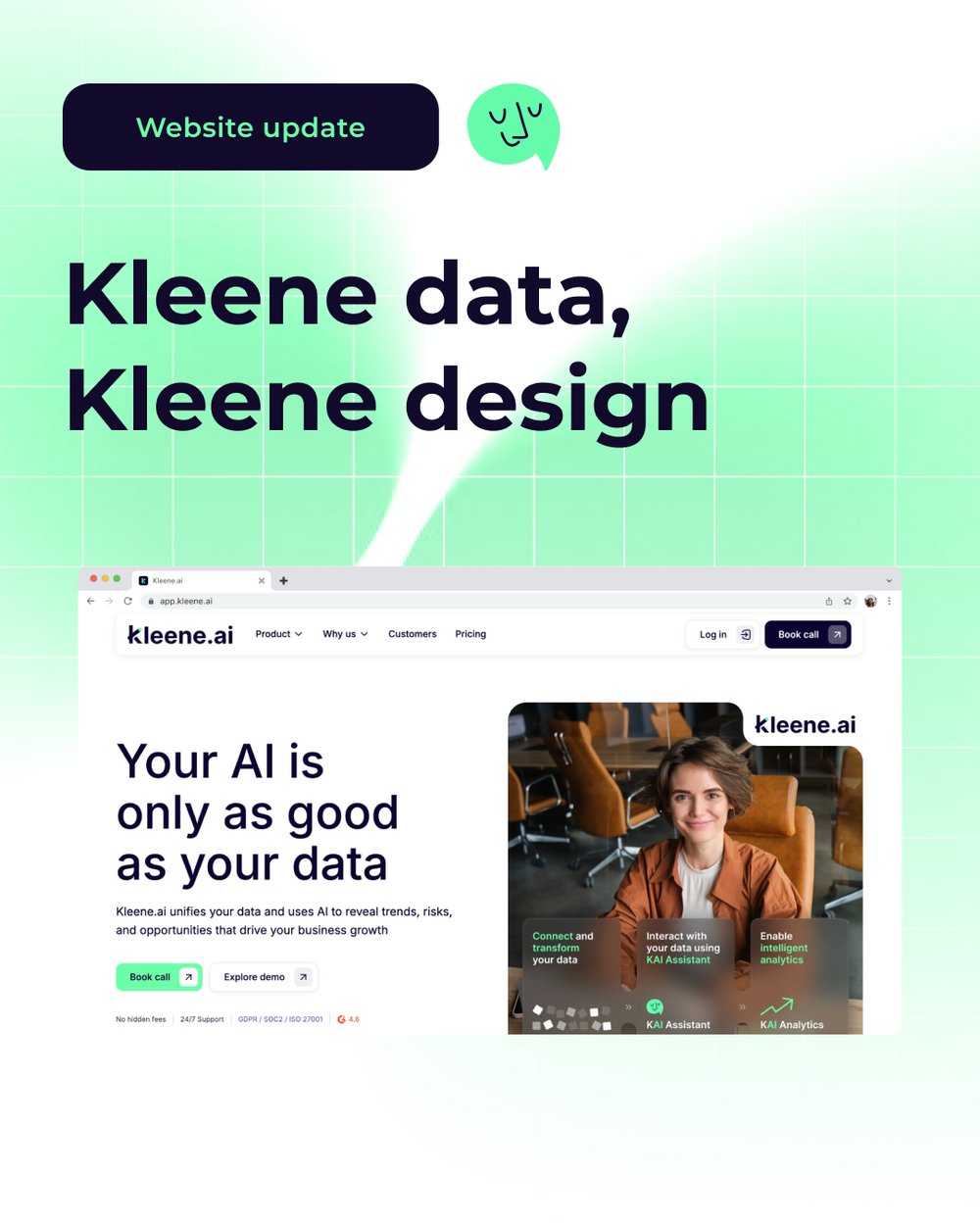
Honest truth, if you've ever struggled to explain what Kleene.ai does, you weren't alone. We've been working hard to fix that.
With our new product updates and clearer positioning, now felt like the right time to rebuild how the website looks too. The new Kleene.ai is live. Take a look and tell us what you think 👇
Is AI actually moving the needle for your team's productivity? Take our 30-second survey and tell us where it's delivering, and where it's falling short.
We’ll share the results and what they mean for modern ELT and AI-ready data platforms in the next newsletter.





%201.svg)
