TLDR:You can tell a lot about where a business is with data before they tell you directly. The tech stack they've chosen, the persona you're speaking to, how many people they have in data roles, and what industry they're in all give you a picture. A CFO might not know the name of the ESP, but the fact that they're on a particular one says something about how they buy and what they've prioritized. The questions I'm always asking early: what tools are they running, who have they hired, and what problem are they trying to fix today.
One of the big things I look for when speaking with a new prospect is how well they actually understand their own tech stack. And what I've found is that the level of knowledge varies a lot depending on who you're speaking to. A CTO will generally have a good understanding across business units. They'll know the CRM, the ERP, the ecomm platform. But a CFO or a CMO might have a completely different answer, just based on their visibility into that particular part of the business.
That gap itself tells you something. If the CFO doesn't know what ESP marketing is running, or the CMO has no idea what's in the data warehouse, that's a signal about how joined up the business actually is around data.
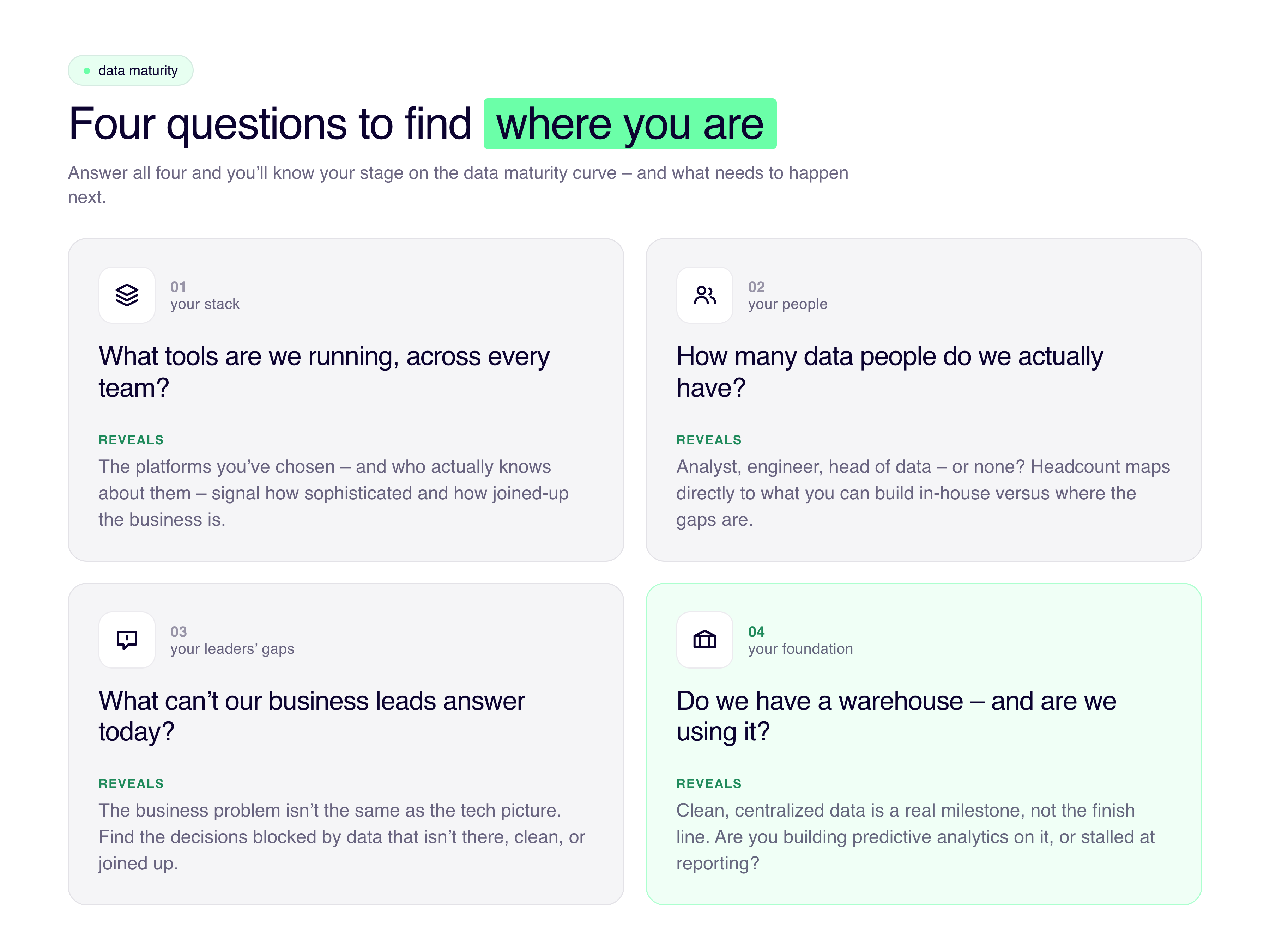
So before anything else, the questions worth asking are pretty simple.
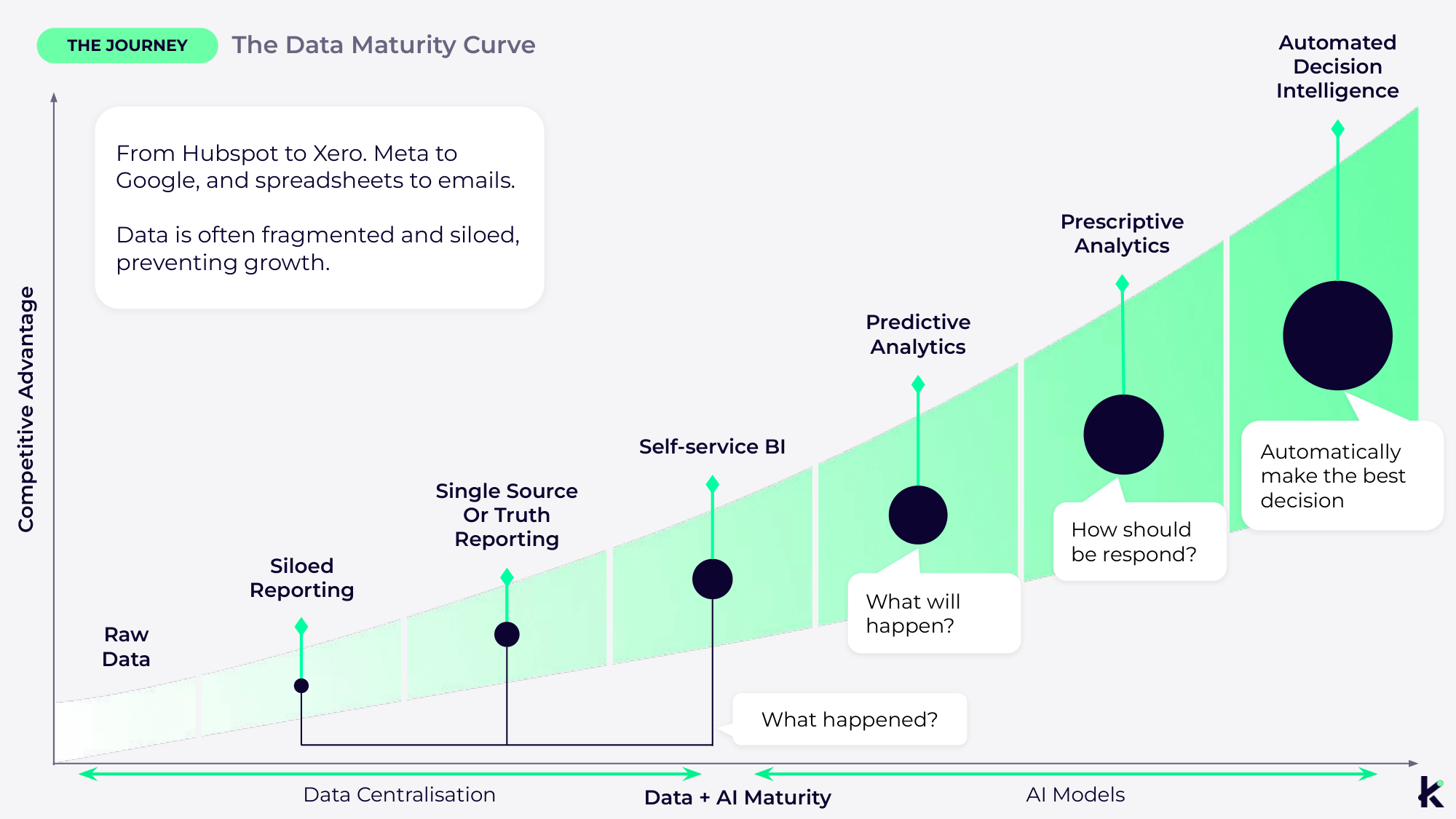
The 'Data Maturity Curve'. Companies need to ask themselves the four questions below to figure out where on it they are, and what they need to do next to drive growth.
What tools are we actually running, across every team?
Not just the headline systems. What is every business unit using day to day? What did finance buy independently? What did marketing evaluate and choose, and why? Does the CTO have visibility into all of it?
The tools themselves say a lot. Some platforms are great general tools but might not have the same strengths in something like segmentation depth that a more specialist platform would have. And the choice of tool hints at not just where the department is, but where the business is from a maturity perspective. It also hints at what the business is like when buying tech. If they've gone through a proper process of evaluating and choosing, they'll understand not only how to buy tech better, but what each piece actually does. Whereas if someone just goes for the big brand name, that kind of insinuates they're going for what's safe.
Revenue impacts this too. Generally, the more revenue you have, the more likely you are to be on a more sophisticated system. It's not always true, but it's a reasonable baseline.
How many data people do we actually have?
Do we have an analyst? Do we have an engineer? Do we have a head of data? Do we have any at all?
That question alone will tell you a lot about the maturity of the data function. And honestly, certain verticals just have different levels of data maturity based on what they need to do. Generally an insurance company is going to have more data engineers than a menswear or footwear brand. That's just how it works. But for any business, the presence or absence of dedicated data people tells you a lot about what you're capable of doing yourselves and where the gaps are.
What are our business unit leads actually struggling with?
This one gets missed a lot. The technical picture and the business problem aren't always the same thing. Your finance person, your marketing person, your ops lead: what can't they answer right now because the data isn't there or isn't clean or isn't joined up?
Understanding what each leader actually needs is as important as understanding what tools you have. Because the tools might exist and the data might technically be somewhere, but if it's not helping the people who need to make decisions, it's not working.
Do we have a data warehouse, and are we actually using it?
This is often where it gets real. A lot of businesses have got to a point where they've centralized data somewhere, it's clean, reporting is accurate, and then they've stopped. That's a genuinely important step and not one to undervalue. But the question is: are you going to push on from there?
Start looking at what a data warehouse would look like if you don't have one, or whether the one you have is actually being used as a foundation for anything beyond basic reporting. What BI tools would help? What does it look like to bring clean, accurate data into those tools in a way people can actually trust and act on?
Those four questions, what tools are we running, who do we have in data, what do our leaders actually need, and what does our data infrastructure look like, are the starting point. Get clear on all four and you'll know pretty quickly where you are and what needs to happen next.
Four of the questions you can ask about your company to find out where you sit on the data maturity curve
Want to see where you are on the Data Maturity Curve?


%201.svg)


%201.svg)
