Effective ways to calculate customer acquisition cost (CAC)
April 24, 2025
- min read
For e-commerce and SaaS companies, learning the Customer Acquisition Cost formula is crucial. This metric represents the total expenses incurred to acquire a new customer, encompassing everything from marketing and advertising to staffing costs. A balanced CAC is essential; if it's too high, the company might need to increase prices or cut back on features, negatively impacting competitiveness and customer satisfaction. Conversely, a low CAC can indicate an opportunity to reallocate resources or adjust pricing strategies for better profitability.
Recognising and strategically managing CAC is, therefore, fundamental to optimising sales and marketing strategies and ensuring sustainable business growth.
As your company scales, Customer Acquisition Cost becomes even more important — not just as a financial KPI, but as a strategic signal. It reflects how well your teams align across marketing, sales, and product. If your CAC is rising while conversion rates stay flat, it might signal inefficiencies in your funnel or mismatched targeting. On the other hand, a decreasing CAC combined with stronger retention is a sign that your acquisition engine is working — and that your offer is truly resonating with the right customers.
What is the customer acquisition cost formula?
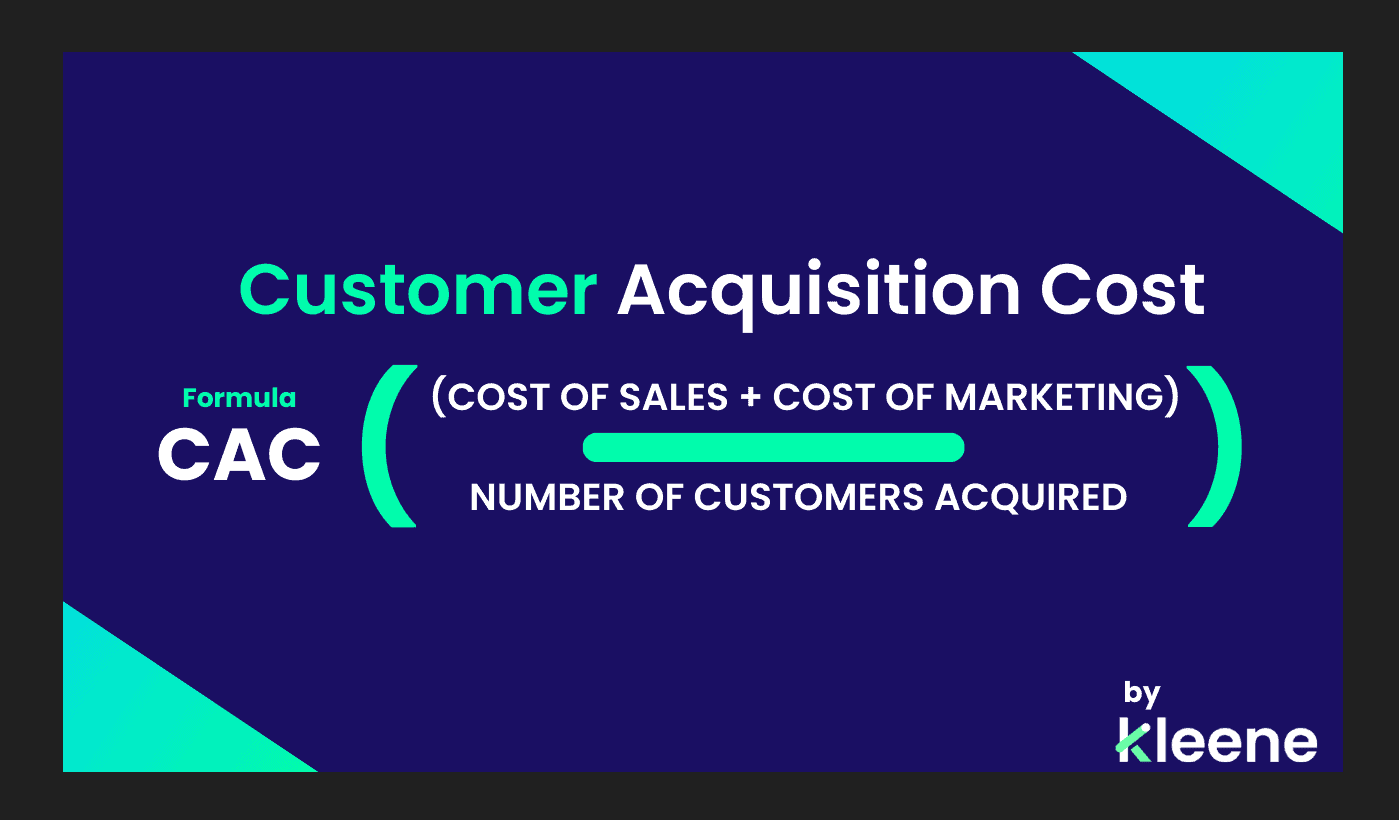
A company's CAC is the total sales and marketing cost that go into earning a new customer over a specific period. That cost is built up from marketing, advertising, staffing costs and other elements. Add all of those together, and divide it by the number of customers you acquired in a set period and you have the cost of acquisition.
So, CAC is the cost of converting people who respond to adverts and visit your store or site, to become a spending customer. It is a key metric for marketing and sales to understand the fundamentals of acquiring customers and is used with other metrics to see how much they spend as part of the customer journey and your value proposition.
Why is calculating customer acquisition cost formula is crucial for businesses?
All companies need profit and if your CAC is too high, then your marketing efforts are eating into profit margins. Reducing the CAC will make the business more sustainable and deliver better results, while allowing for more funds for other marketing campaigns or product development.
How do you calculate CAC?
As mentioned, CAC is the sum of all sales and marketing costs divided by the total number of new customers during a defined period. The cost base is built up from the various expenses for your marketing efforts, including salaries, design costs, advertising fees and so on. They need to be measured as accurately as possible to deliver an accurate CAC.
Revisit CAC calculations and costs on a regular basis to track marketing growth and how the impact of your CAC encourages or forces you to change your approach to acquiring customers.
How do marketing and advertising expenses affect customer acquisition cost?
The total CAC will rise and fall periodically as marketing expenses increase during key selling periods, such as the new tax year for SaaS firms as customers’ budgets are released, and seasonal selling periods like Thanksgiving, Black Friday and Christmas for retailers.
Office and staffing costs might also grow as the business expands,or your use of freelance designers, marketers and software increases. Same goes for advertising costs, notably in competitive markets where there is lots of activity, pushing the prices of adverts or bids up.
What is the difference between direct and indirect costs in customer acquisition cost?
The indirect costs associated with CAC are your general business costs, such as staff wages, office overheads including equipment.
Direct costs are those relevant to the cost of adverts, such as your marketing software subscriptions, the cost of adverts, freelance designers specifically focused on creating advert content, editorial costs and so on.
As all of these may change over time, keeping a working list of costs is vital to delivering an accurate CAC figure.
How to reduce the overall customer acquisition cost?
Business and marketing metrics need to be used in a meaningful way to achieve positive results. The best way to do this is through a unified analytics tool or smart system like Kleene.ai, where our marketing optimisation spend tools deliver valuable insights into your metrics.
Younger or smaller firms need to pay particular attention to the customer acquisition cost, as a high customer acquisition cost and a low CLV will rapidly create problems for the business. With those insights, you can reduce CAC by:
Tightening focus on the most valuable or regular-buying segment.
Retarget customers who showed an interest but didn’t purchase.
Use marketing automation and optimisation tools to increase efficiency.
Boost engagement across channels with value-added services, bots and smart adverts.
Cap your advertising spend and bidding to drive more creative thinking.
If you are new to using these metrics in marketing, the good news is there are plenty of templates and apps available to do the hard work for you, as long as you have some solid data to work with. Then you can work on reducing customer acquisition and boosting sales, revenue and profit.
What are common mistakes to avoid when calculating customer acquisition cost?
Calculating CAC accurately is key to understanding how much it really costs to gain new customers. However, many businesses make common mistakes that can skew the results. Here are some to watch out for:
Poor Data Quality or Inconsistency: Using incomplete or inconsistent data—especially less than three months’ worth—can lead to unreliable CAC figures. Also, data from unreliable sources or that isn’t aligned with key metrics like customer segments or sales timelines can distort insights.
Ignoring Indirect Costs: Many companies only include direct marketing expenses, but forget indirect costs like salaries, software tools, and overheads. Excluding these can lead to underestimating your true CAC.
Including Existing Customers: CAC should focus on new customers only. Including repeat or returning customers will lower the CAC artificially and give a misleading view of your marketing efficiency.
Lack of Customer Segmentation: Failing to break down CAC by customer type, location, or channel can result in overly general data. Different customer groups often have very different acquisition costs.
Misallocating Personnel Costs: Only a portion of employee salaries should be included in CAC if they’re only partially involved in acquisition. For example, if a designer spends 30% of their time on acquisition tasks, only 30% of their salary should count.
Confusing CAC with Other Metrics: CAC is different from Customer Lifetime Value (CLV) or Cost Per Acquisition (CPA). Mixing these up can lead to wrong conclusions and poor strategy decisions.
Not Factoring in Returns or Refunds: If customers return products or ask for refunds, that revenue should be deducted. Otherwise, CAC might look better than it actually is.
Failing to Update CAC Regularly: CAC isn’t a “set it and forget it” metric. It should be updated regularly to reflect changes in marketing spend, strategies, or market conditions.
Overlooking Customer Retention: High acquisition costs are a problem if customers don’t stick around. Retention plays a big role in the long-term value of your acquisition efforts.
Forgetting About Discounts and Promotions: If you rely on heavy promotions to attract new customers, those costs should be included in your CAC calculations.
Ignoring Multichannel Attribution: Customers often engage with several marketing channels before making a purchase. Failing to account for the cost of all those touchpoints can make your CAC look lower than it really is.
By avoiding these mistakes, your CAC calculations will be more accurate—and more useful in shaping smart, data-driven business decisions.
Tips for using customer acquisition cost and other metrics
You can break down customer acquisition cost into different marketing efforts, such as SEO, content marketing, affiliate marketing and other efforts to create a more granular overview of your data.
Taking a panicked reaction and making big marketing changes based on a first CAC reading is unlikely to help matters.
Having established a baseline CAC and CLV figures, you can segment your customers to find the most attractive demographics to market to.
If advertising costs are pushing your CAC up, you can look for overlapping audiences, niche keywords and capping your bids to reduce the CAC.
When changing your strategy, look across every aspect of the business, including product, marketing, sales approach and even aspects like customer support to find out where you could do things better.
Want to learn more? there are three other ways you can get value from Kleene.ai:



%201.svg)
